Arrow Icon
Back to Blogs

Real-Time Fleet Monitoring: Why Businesses Need IoT-Enabled Solutions

Real-Time Fleet Monitoring: Why Businesses Need IoT-Enabled Solutions

Logo

Published:

27 November, 2025

Fleet Monitoring

It is more difficult than ever to manage a fleet in the modern, fast-paced business world. As fuel costs rise, delivery schedules grow shorter, safety issues and customer demands increase, the organisations must have full capability over each vehicle, trip and asset. The conventional fleet tracking systems are no longer sufficient. Enterprises are currently in need of intelligent, instant data that is driven by sophisticated technology- and this is where IoT-based fleet management comes in.

Location tracking is nothing compared to real-time fleet monitoring. It supplies a real-time awareness of motorist actions, vehicle wellbeing, gas consumption, route achievements, security concerns, and working dangers. With IoT sensors and GPS devices, cloud software, and AI-based analytics, companies will be able to move their fleet operations to a more proactive approach. The technology enables businesses to minimise costs and maximise productivity in addition to enhancing the quality of the services and ensuring that all assets are secure, effective, and responsible.

The following is a comprehensive and detailed explanation of why companies in various sectors should implement IoT-based fleet tracking solutions.

What is IoT-Enabled Fleet Management?

The IoT-Enabled fleet management is a process which involves a continuous process of tracking all assets in motion, which could be vehicles, machines, equipment, or even workers, in real time using IoT devices that are linked to a centralised platform. The live information that is collected and transmitted using these devices includes:

  • GPS location

  • Speed and route history

  • Fuel levels and mileage

  • Engine and battery health

  • Driver activities

  • Unauthorized movement

  • Geo-fence violations

  • Tampering or theft alerts

The information enables fleet managers to make informed decisions, act promptly on problems, and ensure that fleet operations run smoothly at all times.

The Reason Real-Time Fleet Monitoring is Important to Present-Day Businesses

1. Instant Visibility and Complete Fleet Transparency

Total visibility is one of the greatest benefits of real-time monitoring. All the vehicles and assets will be indicated on a live map that will be visible to managers. This kills speculation, makes travel arrangements smarter, and no vehicle goes off route. Transparency will also enhance accountability to the drivers, field workers, and contractors.

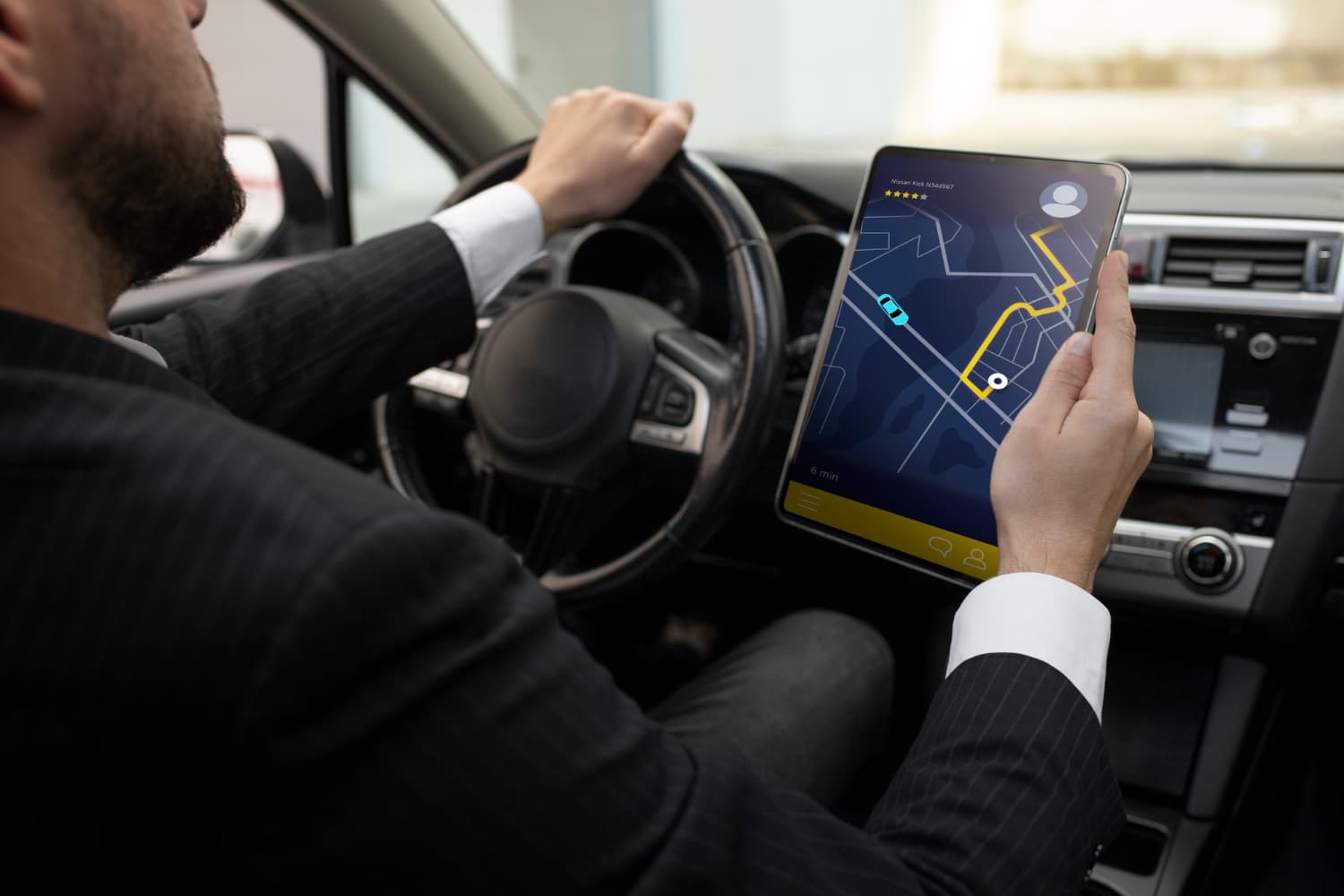
With IoT-based dashboards, companies will be able to track a vehicle's speed, idle period, location, and whether it is going in the appropriate direction or not. Such detail helps to coordinate, avoid abuse, and prevent delays.

2. Enhanced Safety and Performance of Drivers

The driver's behaviour directly influences safety, fuel consumption, and the condition of the vehicle. Some of the actions monitored with IoT systems include:

  • Harsh braking

  • Over-speeding

  • Sudden acceleration

  • Frequent idling

  • Distracted driving signals

Using this data, companies will be able to recognise risky trends, provide learning programs, and develop safety scorecards. This enhances compliance, minimises accidents and enhances insurance claims. Safer driving also increases customer confidence in operations that are time sensitive, such as logistics, transport of healthcare and emergency services.

3. Lower Fuel Prices and Increased Fuel Economy

One of the greatest costs to the fleet-based companies is fuel. The IoT systems monitor real-time fuel consumption and identify problems such as:

  • Fuel theft

  • Unnecessary idling

  • Inefficient driving

  • Long or incorrect routes

  • Engine inefficiencies

Through optimisation of routes and removal of wastage, the companies are able to reduce fuel expenditure by as much as 15 to 30 %. Live data also makes drivers embrace fuel-saving habits, which makes the operations much more cost-effective.

4. Predictive Maintenance for Longer Vehicle Life

Planned downtimes result in costly delays, delivery delays, and costly repairs. The sensor of IoT constantly controls the work of the engine, pressure in the tires, the state of the battery, the state of the brakes, etc.

In case one of the components starts malfunctioning, the system sends alerts in real time. This allows businesses to:

  • Prevent failures through troubleshooting.

  • Eliminate the expensive emergency fixes.

  • Reduce vehicle downtime

  • Increase the asset life.

Predictive maintenance helps to keep the fleets on the road longer and makes them run in a safer and more efficient manner.

5. Smartest Way and Rapid Deliveries

IoT technologies monitor traffic, road conditions, weather, and historical events to propose the most suitable and quickest paths. In the case of logistics and delivery firms, this will lead to:

  • Reduced travel time

  • Lower fuel spend

  • More deliveries per shift

  • Accurate ETAs for customers

  • No congested or limited roads.

The process of route optimisation will also assist drivers in making fewer trips with delays; this enhances customer satisfaction and the reliability of its operations.

 

IoT-Enabled Solutions
Real-Time Fleet Monitoring

6. Larger Asset Security and Theft Prevention

Thefts of fleets, unhindered movements, and abuse are key financial risks. Substantial protection of assets is provided by real-time fleet monitoring:

  • Geofencing (warnings when the vehicles go outside of authorised zones)

  • Ignition alerts

  • Tamper detection

  • Illegal movement detectors

  • Immobilisation controls in real time (subject to local regulations)

The application of these security features has rendered the IoT monitoring imperative to those industries that handle high-value equipment, including construction, mining, and oil and gas.

7. More Efficient Fleet Usage and Less Wastage in Operations

Most of the businesses are unaware of the fact that they use some vehicles less and others more, resulting in increased wear and tear. IoT reports show:

  • Vehicle utilisation rates

  • Working hours

  • Idle time

  • Trip efficiency

This assists the management in creating an equal distribution of work, less wastage during operations, and needless purchases of vehicles. The understanding of fleet utilisation makes all assets deliver maximum ROI.

8. Automated Compliance and Simple Reporting

Such industries as logistics, healthcare, and transportation should comply with strict compliance rules associated with:

  • Working hours

  • Emission norms

  • Vehicle inspections

  • Service logs

  • Proof of delivery

IoT systems automate records and create reports on compliance in real time. This reduces the amount of paperwork and prevents penalties through hand mistakes.

9. Improved Customer Satisfaction and Quality of Services

People are now demanding accountability and honesty. IoT monitoring provides:

  • Live tracking links

  • Accurate delivery timings

  • Robot-generated warnings and notices.

  • Faster issue resolution

Such elements assist businesses to provide higher quality services, minimise complaints and generate long-term trust.

10. A Digital Ecosystem that is Scalable and Future-Ready

The IoT solutions expand along with your business. Fleet monitoring can be integrated into companies with:

  • Fuel management systems

  • Worker tracking

  • Asset tracking

  • Equipment monitoring

  • ERP, CRM, and billing software

This provides an interlinked and automated eco-system that enhances efficiency in the whole business- not in the fleet alone.

The Industries That Will Benefit Most from the IoT Fleet Monitoring

1. Logistics & Transportation

Improves the accuracy of delivery and minimises delays in operation.

2. Construction and Heavy Equipment

Monitors costly equipment and eliminates theft.

3. Healthcare and Ambulance services

Provides transportation of medical assets on time and in a safe manner.

4. Oil and Gas, Mining and Waste Management

Enhances the safety of dangerous situations.

5. Corporate & Service Fleets

Increases productivity and employee responsibility.

Important Features: The IoT Fleet Monitoring System Must Possess

  • Real-time GPS tracking

  • Fuel monitoring & alerts

  • Driver behaviour tracking

  • Predictive maintenance

  • Geofencing

  • Automated alerts & reporting

  • Route optimization

  • AI-based analytics

  • Mobile & web dashboard

These features are useful in the formation of a robust, future-proof fleet ecosystem.

Conclusion

The competitive world of business cannot allow a firm to be inefficient, sluggish or blindfolded in its fleet management. Real-time fleet tracking enables organisations with real-time information, improved safety, reduced operational expenses, and scalability. Through the strength of IoT-based fleet management, companies can be more accurate, automated, and have complete control over all their assets- making fleet management smarter, faster and more efficient.

Frequently Asked Questions

1.​‍​‌‍​‍‌ What do you mean by real-time fleet monitoring?

Real-time fleet monitoring is a process where the Internet of Things (IoT), GPS positioning devices, and cloud computing are used to keep a live check on the vehicles and equipment. Besides location, the system can report in real-time on fuel consumption, engine performance, and driver activity, and the companies get to make good and quick decisions.

2. What are the benefits of IoT-enabled fleet management to businesses?

Enabling a fleet management system with IoT is a good business move as it eventually leads to enhanced visibility of the operation, reduction of the operational costs, safety of the drivers, theft prevention, and better routing- all of which is done with automated data and AI-driven insights.

3. What industries are the most profitable in terms of IoT-based fleet monitoring?

Those industries that would profit the most are the logistics, transportation, construction, healthcare, oil and gas, mining, and field service industries since they are the ones that use a lot of vehicles and are heavily dependent on various types of equipment that is movable.

4. Does IoT fleet tracking save money on fuel?

Definitely. By using IoT, fleet tracking will be able to solve the problem of fuel consumption, idleness, route optimisation, and fuel embezzlement. Such insights can help companies not only decrease the wasteful fuel costs that are wasteful but also lower total fuel costs.

5. What is the kind of data an IoT fleet monitoring system collects?

It acquires the most up-to-the-minute data, such as the GPS location, speed, engine operation, the temperature of the engine, fuel, idle time, driver activity, and maintenance ​‍​‌‍​‍‌notifications.

Explore More

IoT for Worker Safety

29 November, 2025

Why Construction Companies Are Adopting IoT for Worker Safety

Why Construction Companies Are Adopting IoT for Worker Safety

Read More
Arrow Icon
Construction Equipment Tracking

1 December, 2025

How IoT Devices Improve Construction Equipment Tracking and Utilisation

How IoT Devices Improve Construction Equipment Tracking

Read More
Arrow Icon
IoT for Vehicle Tracking

3 December, 2025

Top Benefits of Using IoT for Vehicle Tracking and Maintenance

Top Benefits of Using IoT for Vehicle Tracking and Maintenance

Read More
Arrow Icon

Frequently Asked Questions

Let's build smarter operations together.

Speak with our experts to implement smart vehicle tracking, asset monitoring, and IoT-powered automation for your operations.

Contact Us
Arrow Icon
Request a Demo
Website Logo

IoT Edge helps industries track, monitor, and automate operations with connected technologies.

Instagram Icon
Facebook Icon
Linkedin Icon
Youtube Icon

Services

Get in Touch

Mail Icon

© 2026 IoT Edge | Privacy Policy | Terms of Use